Industrial automation: the technological trends that will mark the coming years
The Industrial Sector is Undergoing Technological Transformation
The digitalization, artificial intelligence, and connectivity are changing the way production processes are designed and managed. Today, companies are seeking more efficient, connected systems that can quickly adapt to market needs.
The New Era of Industrial Automation
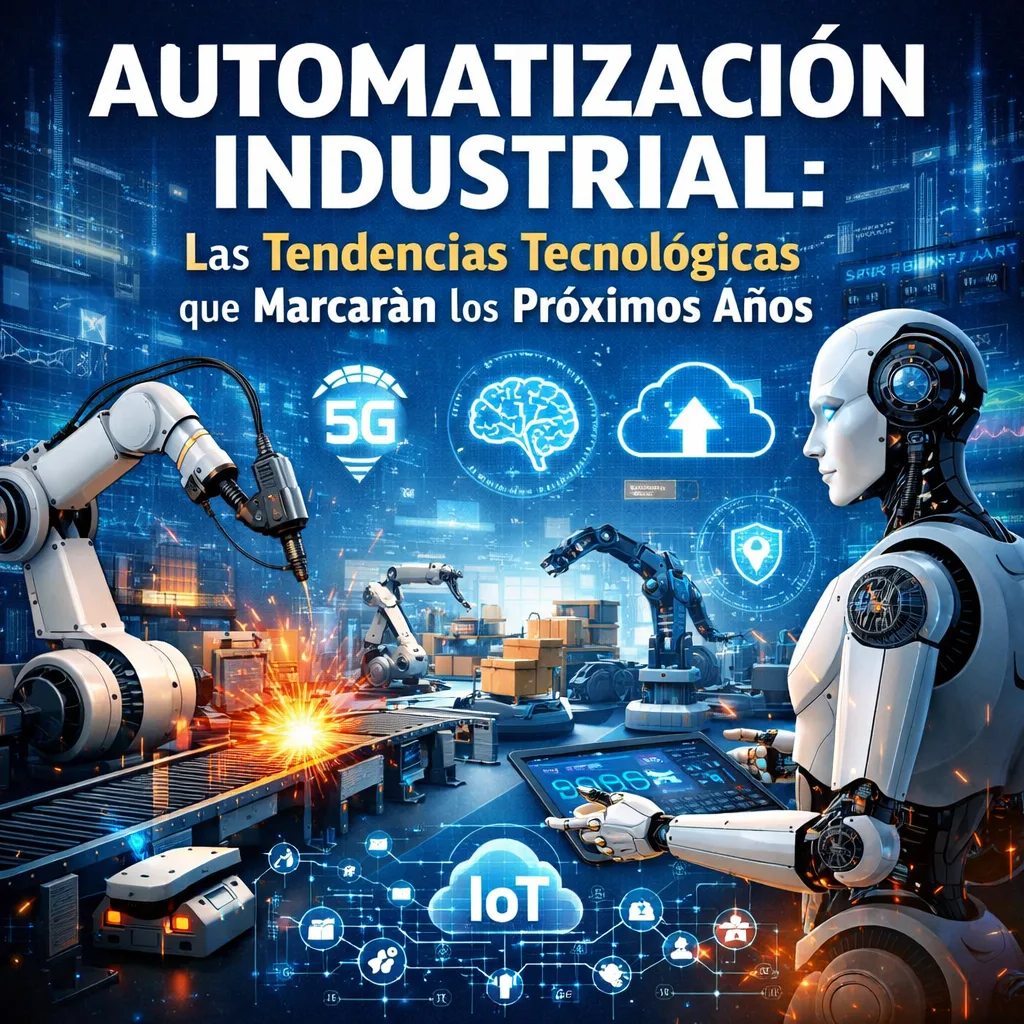
Industrial automation is no longer limited to robots or traditional control systems. Modern factories are incorporating technologies such as:
- Artificial intelligence applied to industrial processes
- Edge computing for local data processing
- IIoT (Industrial Internet of Things) systems
- Software-defined automation
These technologies allow companies to obtain real-time data, improve operational efficiency, and reduce downtime in facilities.
More Connected Factories
One of the most significant changes in the industry is the growth in the number of connected devices. Sensors, controllers, and industrial equipment are being integrated into intelligent networks that enable constant process monitoring.
The combination of industrial IoT with high-speed networks and data analysis systems even allows for predicting failures and optimizing equipment maintenance.
Automation and the Energy Transition
Automation also plays a fundamental role in the integration of renewable energy into the energy system. Technologies such as intelligent SCADA systems or digital twins can improve energy production management and network stability.
This is particularly relevant in industrial installations that seek to reduce their energy consumption and improve their efficiency.
The Future of Industry
The future of industry lies in smarter, more sustainable, and connected factories. The adoption of new technologies will allow companies to enhance their competitiveness, optimize resources, and adapt to a more dynamic economic environment.
In this context, it is increasingly important to have technology providers capable of integrating industrial and energy solutions.
At ADJ DiTec, we are committed to accompanying our clients in this industrial transformation process, offering technology solutions tailored to the needs of each project.